Øresund Fixed Link: how a single constraint built a bridge that became a tunnel
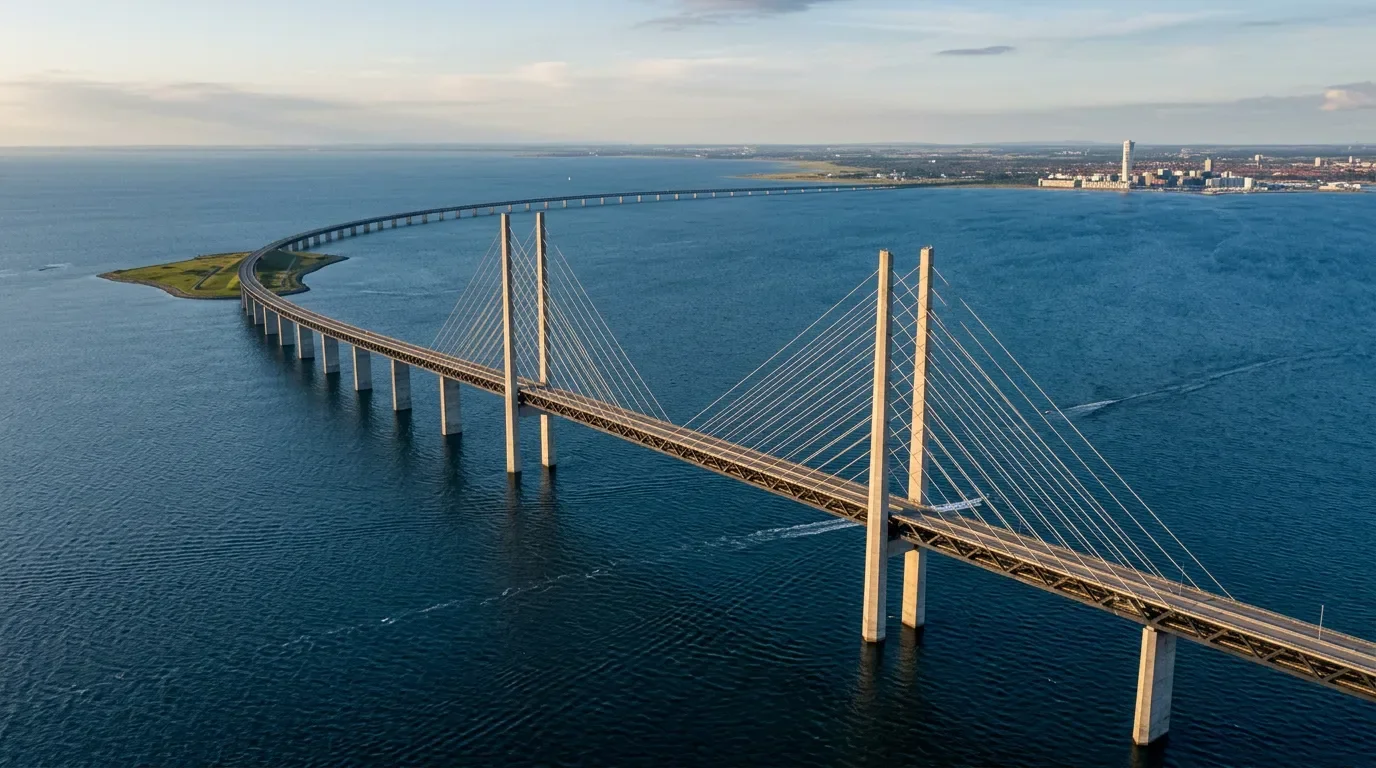
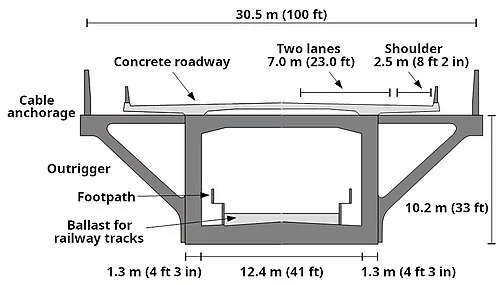
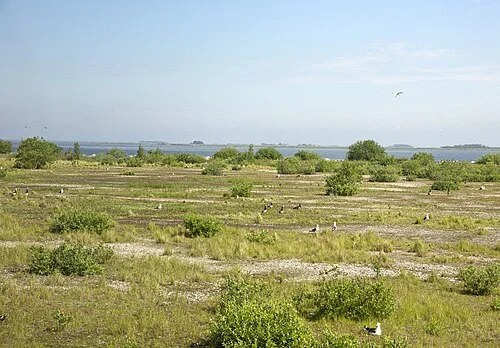
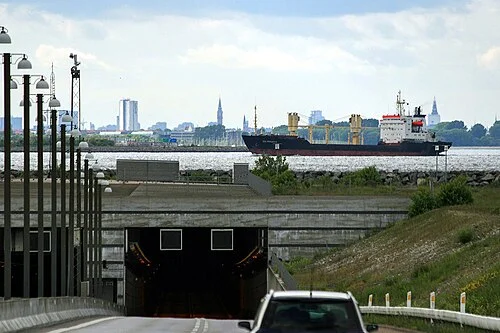
A 5,195-word engineering case study of the Øresund Fixed Link (opened July 1, 2000), tracing how the requirement to leave the Øresund strait's water flow "unaffected" forced every major engineering decision — the cable-stayed form over suspension, the 141 m approach spans enabled by crane Svanen's availability, the five-bore immersed tube tunnel beneath Kastrup Airport's flight paths, and the 1.3 km² artificial island connecting them. Covers design competition (Calatrava and Foster lost to Arup's ASO Group), deck geometry (two-level Warren truss), construction (three months early), dual-voltage rail integration, 26 years of traffic data, Peberholm's accidental Natura 2000 status, and the 2025 Lund University finding that the 100-year design life can reach 200 years.

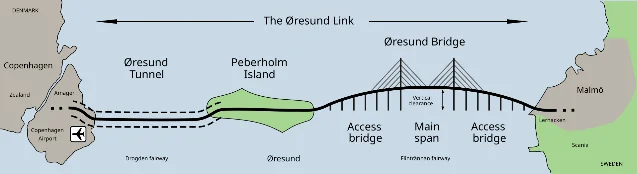
The zero-blockage constraint

Design competition and the bridge form decision
The cable-stayed bridge: pylons, cables, and the deck structure

Peberholm: the artificial island that became a nature reserve

The Drogden tunnel: twenty concrete elements, each weighing 55,000 tonnes

Construction: UXBs, a deflected tunnel element, and three months early
The electrical engineering problem nobody initially saw
Technical specifications at a glance
Twenty-six years of operation: what the numbers show
Legacy and influence
参考来源
- 1Øresund Bridge — Wikipedia
- 2Designing the Øresund Bridge — Arup
- 3New research: The lifespan of the Öresund Bridge can be doubled — Lund University
- 4Peberholm — Wikipedia
- 5Immersed tube — Wikipedia
- 6Øresund Line — Wikipedia
- 7Record year for traffic across the Øresund Bridge — The Copenhagen Star
- 8Denmark and Sweden's Øresund bridge turns 25 — The Guardian
- 9Øresundsbron 2025 anniversary — Øresundsbron
- 10Fehmarn Belt fixed link — Wikipedia
- 11Arup to advise on asset management strategy for Øresund Bridge — Arup
围绕这条内容继续补充观点或上下文。